
Why Your Wi-Fi Dies at the Lanai: Outdoor PoE+ Access Points for St. Cloud & Harmony Estates
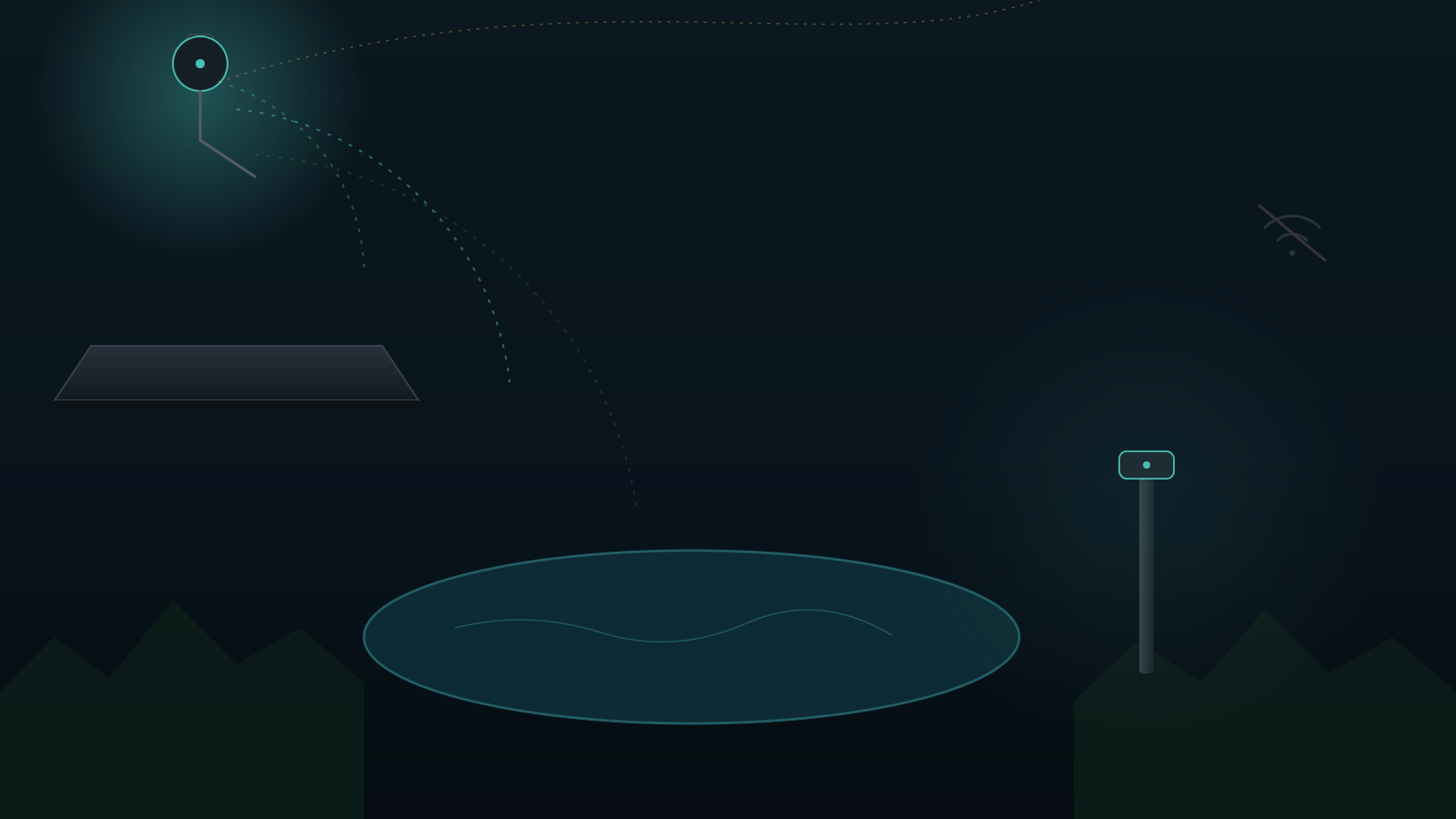
Stand at the pool cage on a quarter-acre-plus St. Cloud or Harmony lot and watch your phone drop to one bar. That's not a bad router — it's physics. Low-E glass, stucco-over-block exterior walls, and a screened lanai roof each attenuate a 5–6 GHz signal by another 6–10 dB before it ever reaches the pool deck. An indoor router sitting in a media closet was never going to win that fight.
The instinct is to buy a plug-in extender for the lanai outlet. It "sort of" works for a season, then corrodes, drops half its throughput repeating the signal, and leaves the pool house, outdoor kitchen, or detached garage completely dark. Outdoor coverage isn't an extension of your indoor network — it's a separate engineering problem, solved with hardware built to live outside and powered over the same cable that carries its data.
Quick answer: Consumer extenders repeat a weak indoor signal from a wall outlet. Purpose-built outdoor access points — eero Outdoor 7 or UniFi U7 Outdoor PoE+ — get their own dedicated network drop, weatherproof housing, and full-strength radio, mounted exactly where the coverage gap actually is.
- A single eave- or pole-mounted outdoor AP outperforms three indoor extenders and eliminates the extension-cord aesthetic on your lanai
- PoE+ delivers power and data over one Cat6A run — no exterior electrical outlet, no corrosion-prone wall-wart in a covered soffit
The Fast Verdict: Wi-Fi Extenders vs. Purpose-Built Outdoor PoE+ Access Points
| Coverage Metric | Plug-In Wi-Fi Extender | eero Outdoor 7 / UniFi U7 Outdoor PoE+ |
|---|---|---|
| Placement | Wherever there's an exterior outlet | Eave, pole, or gable — wherever coverage is actually needed |
| Power Delivery | Exterior electrical outlet + wall-wart adapter | PoE+ over a single Cat6A run — no outlet required |
| Weatherproofing | Consumer-grade, not rated for direct exposure | IP65/IP67-rated housing built for direct sun, rain, and salt air |
| Throughput | Halved bandwidth repeating over the same radio | Full-strength dedicated radio, wired backhaul to the switch |
| Detached Structures | Pool house, cabana, and garage stay dark | Extend coverage to any structure a conduit run can reach |
| Network Visibility | Invisible to your gateway — just another repeater | Managed, mapped, and segmented like every other access point on the estate |
The Rule of Thumb
Don't fight physics from indoors: no indoor router or extender pushes a clean signal through stucco, low-E glass, and a screened pool cage — the fix lives outside the exterior wall, not behind it.
Wire it, don't plug it: a PoE+ outdoor access point on a home-run Cat6A drop from your equipment rack outperforms any Wi-Fi-fed extender, survives a Florida summer, and disappears into the eave line instead of dangling from an outlet.
Professional Architecture: Connected Estate Engineering
Outdoor coverage design isn't "add an access point and hope." It's a signal-propagation exercise: mapping pool decks, lanais, outdoor kitchens, and detached structures against roof overhangs, screen enclosures, and line-of-sight obstructions, then placing hardware to cover the space with the fewest radios and zero visible cabling.
At Connected Estate, we design eero Outdoor 7 and UniFi U7 Outdoor PoE+ deployments specifically for large Central Florida lots — mapping coverage against your lanai, pool cage, and any detached structures, then specifying eave or pole mounts, run lengths, and switch port allocation so the access points land exactly where the dead zones are. (Our practice is configuration-only — physical cabling, conduit runs, and mounting are handled by your low-voltage partner.)
1. PoE+ Eliminates the Outdoor Power Problem
Exterior electrical outlets are expensive to add, and the wall-wart adapters extenders rely on don't survive years of Florida humidity and heat cycling in a covered soffit. A PoE+ outdoor access point pulls both power and data down a single shielded Cat6A cable from an indoor switch, so there's nothing to weatherproof at the power supply — because there isn't one at the AP.
2. Weatherproof Radios, Not Consumer Electronics in a Baggie
eero Outdoor 7 and UniFi U7 Outdoor PoE+ are built with sealed, UV-stable housings rated for direct sun and driving rain — not a consumer router someone zip-tied into a plastic bag under the eave. That rating matters on a screened lanai that still sees wind-driven rain in a summer storm, and it matters even more on an unscreened pool deck or detached pool house wall with full sun exposure.
3. Wired Backhaul Reaches Structures Wi-Fi Never Will
A detached garage, cabana, or pool house separated from the main residence by open yard is a dead zone for any wireless-only extender — the signal simply doesn't survive the distance and obstruction. Running a home-run Cat6A conduit from the main equipment rack to a PoE+ switch at the detached structure turns that gap into full-strength, wired-backhaul coverage, with the same VLAN segmentation and device visibility as every other access point on the property.
Frequently Asked Questions
Do I need a separate PoE switch for outdoor access points?
Yes, in most properly cabled estates. A managed PoE+ switch in your equipment rack delivers power and data to each outdoor AP over its home-run Cat6A run, and lets us assign it to the same VLAN and device-visibility policy as your indoor access points — no separate outdoor "network" to manage.
Will an outdoor access point survive direct sun on an unscreened pool deck?
Yes — eero Outdoor 7 and UniFi U7 Outdoor PoE+ are both rated for direct sun and rain exposure, which is the entire point of the hardware. The variable that actually matters is mounting placement: an eave or gable mount with partial shade extends the hardware's service life versus full, unbroken midday exposure on an open pole.
How far can an outdoor AP reach across a large lot?
It depends on obstructions more than raw distance — a clear line of sight to a pool deck or lanai can cover well past 100 feet, while a screened cage or a detached structure behind the house needs its own AP rather than relying on range alone. A diagnostic site survey maps your actual lot and tells you exactly how many access points your coverage gaps require.
Ready to close the dead zones on your lanai and pool deck? Book your Estate Discovery and we'll map exactly what your outdoor spaces need.
Written by
Andrew Marty
Founder of Connected Estate. 15+ years in enterprise IT, now configuring Central Florida's most demanding smart home networks.
Connect on LinkedInReady to fix it for good?
Book your Estate Discovery and we'll map exactly what your estate needs.
Book Your Estate DiscoveryContinue Reading
Why Every eero PoE 7 Access Point Gets Its Own Cat6A Home Run (Not a Wireless Hop)
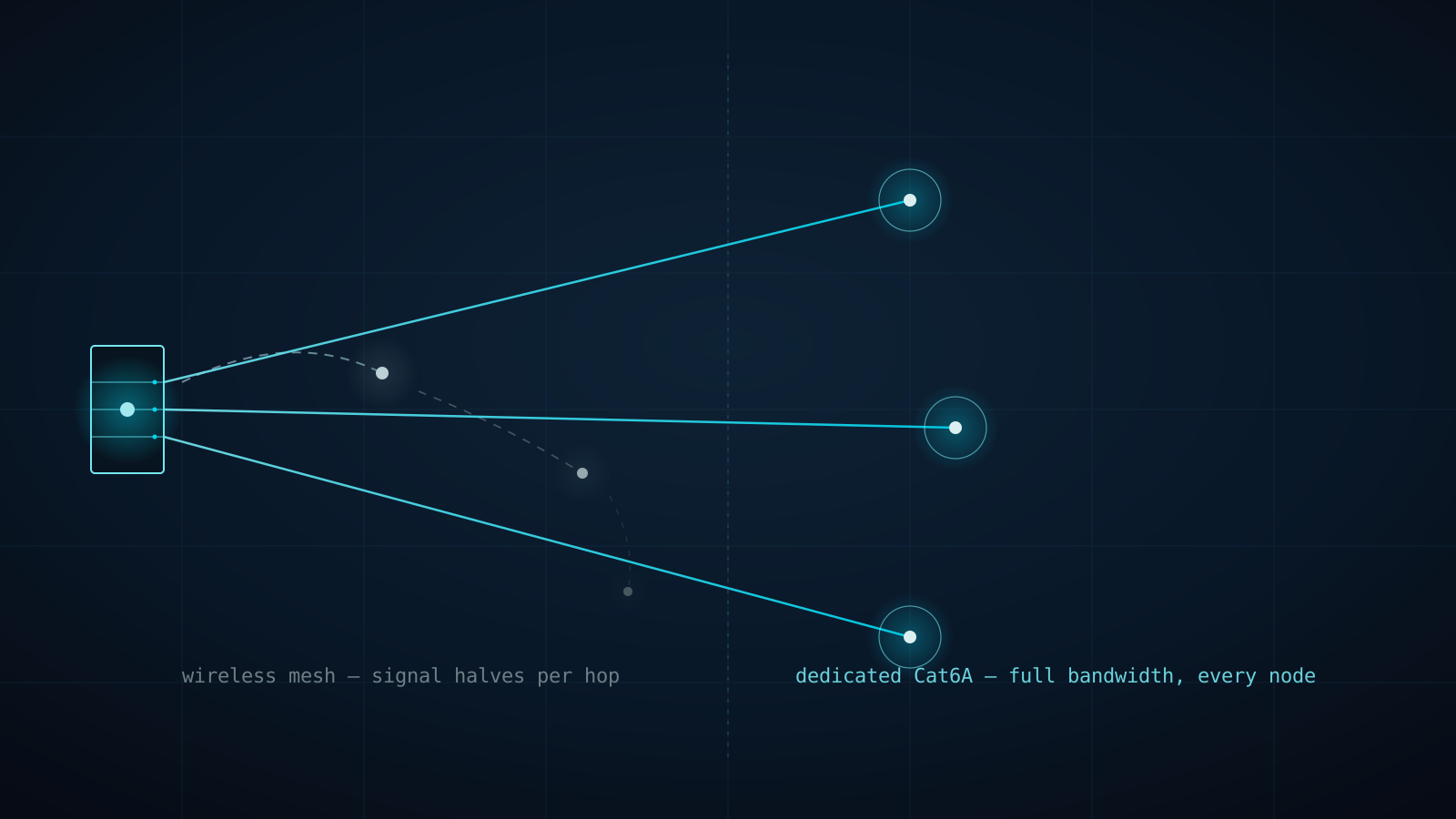
A three-node consumer mesh kit doesn't triple your Wi-Fi — it splits one radio's bandwidth across every hop back to the router. Here's why Connected Estate runs dedicated Cat6A to every eero PoE 7 access point instead of letting them talk to each other wirelessly.

One Flat Network, One Compromised Bulb: Why Estates Need Firewalla Gold Pro and Real VLAN Segmentation
Every device on a stock router shares one broadcast domain — the pool pump controller can see the NAS, and a guest's phone can see the cameras. Here's why Firewalla Gold Pro and hardware-enforced VLANs are the professional fix for St. Cloud and Harmony estates.

Why St. Cloud & Harmony Estates Are Ditching Wi-Fi Smart Switches for Lutron RadioRA 3
Every Wi-Fi smart switch is another client competing for airtime on your home network, and another single point of failure at the breaker. Here's why Lutron RadioRA 3's dedicated Clear Connect RF backbone is the professional lighting standard for Central Florida estates.